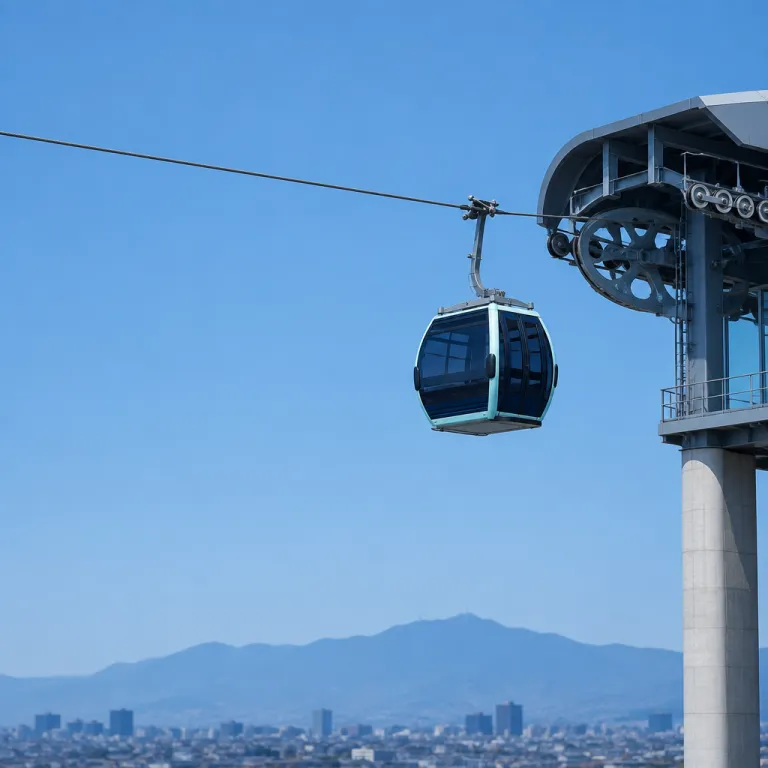
Riding the existing Mexico City cablebus from a central hotel base
The Mexico City cablebus was designed as serious public transport, not a theme park ride. Yet for a traveller based near the city metro grid in Roma, Condesa, Juárez or the Centro Histórico, it has become one of the most revealing detours you can fold into a first stay. Think of the cable car as a quiet, airborne extension of the metro system, carrying you from a familiar metro station into boroughs that rarely appear on hotel booking maps.
Line 1 of the city cablebus links the metro station Indios Verdes with the hillside neighbourhoods of Gustavo A. Madero, while Line 2 runs across Iztapalapa between Constitución de 1917 and Santa Marta. Both cablebus linea routes plug directly into the city metro and Metrobus México corridors, so you can leave a hotel near Insurgentes or Sevilla and be boarding a cable car within 30 to 40 minutes. The fare is just a few pesos, which makes this public system one of the most cost effective ways to understand how the city actually lives.
From the cabins you see the borough fabric change in real time, from the tree lined avenues of central México City to the dense self built slopes of Iztapalapa. Audio announcements in Spanish mark each station, but signage is clear enough that first timers can navigate the stations without stress. For a cultural traveller, this is less about a photo stop and more about tracing the invisible lines between the polished city public core and the working class periphery that keeps it running.
Choosing where to stay when the city cablebus is part of your plan
Hotel choice in México City quietly shapes how easily you can fold the Mexico City cablebus into your days. If you stay in Roma Norte or Condesa, you are close to the Insurgentes and Chilpancingo hubs of the metro system and Metrobus México, which makes reaching Indios Verdes for Line 1 relatively straightforward. From the Centro Histórico, a short city metro ride from stations such as Hidalgo or Bellas Artes connects you to the same northern spine, while a transfer at Constitución de 1917 opens up the Iztapalapa cablebus linea.
Travellers who care about food and culture often split time between central neighbourhoods and a night closer to Coyoacán or San Ángel, using the city public network to move between them. From there, a day trip to Iztapalapa via metro and cable car lets you see how borough level renewal projects, murals and new plazas cluster around cablebus stations like Santa Marta. Planning your base near a reliable metro station matters more than being next to a single sight such as Los Pinos, Cineteca Nacional or the Museo Nacional de Antropología.
Think in terms of ten minute walks rather than star ratings when you map this out. A hotel within a short stroll of a city metro or Metrobus México stop gives you frictionless access to the Mexico City cablebus, the wider metro system and the main cultural axis from Chapultepec to the Centro. That same logic helps when you are choosing where to eat ; staying near Roma or Juárez, for example, makes it easy to reach serious vegan restaurants that are reshaping local dining, as explored in detail on this guide to vegan restaurants in Mexico City and how they shape your hotel choice.
New cable-car lines, future boroughs and what this expansion signals
The Mexico City government has committed to expanding the cablebus cdmx network with three new lines, officially announced by Head of Government Clara Brugada. These future routes will extend the city cablebus system by 39.2 kilometres with 28 additional stations, reaching deep into the south and west of CDMX. While they are not opened yet, the planned lines towards Tlalpan, Álvaro Obregón, Magdalena Contreras, Tláhuac and Milpa Alta tell you exactly where the next wave of urban renewal will concentrate.
For visitors, that matters less as a ride you can take today and more as a map of where the city is investing in public transport and public space. When a cablebus linea arrives, pavements are repaired, lighting improves and new city public amenities appear around each station, from sports courts to small libraries. Over time, boroughs such as Magdalena Contreras or Milpa Alta, currently far from most hotel searches, may feel as accessible as a trip to Los Pinos, Panteón Dolores or Campos Revolución near Chapultepec.
Until then, the most strategic move is to stay central, use the existing Mexico City cablebus lines as a lens on inequality and resilience, and watch how the map shifts between one visit and the next. A morning flight over Iztapalapa from Constitución de 1917 to Santa Marta, followed by an afternoon screening at Cineteca Nacional or a walk through the Bosque de Chapultepec, shows how tightly mobility and culture are braided in this city. In México City, the smartest hotel choice is rarely about the thread count ; it is about how quickly you can step from your lobby into the moving system that ties San Ángel, Indios Verdes and the far hills together.