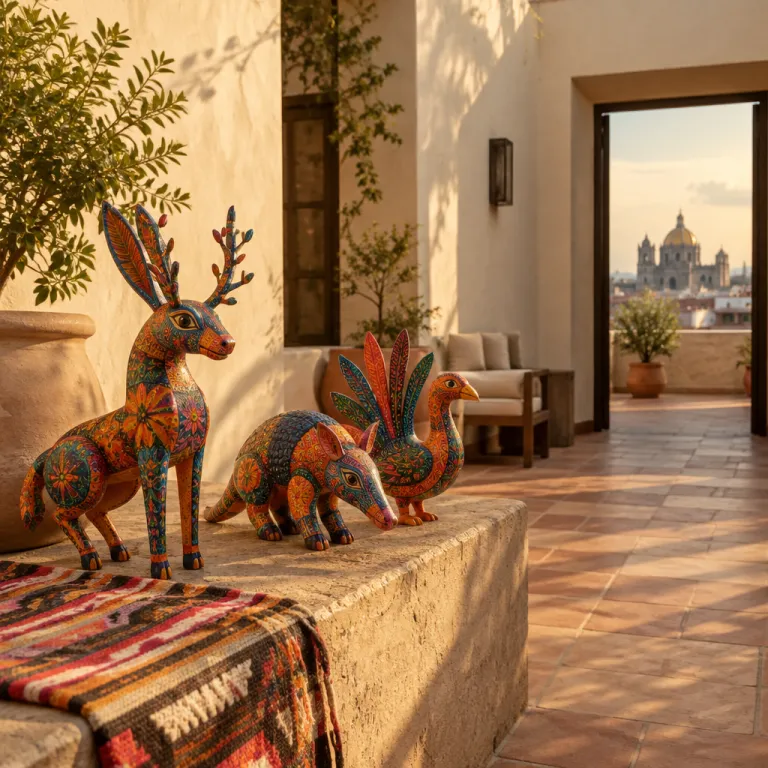
Why oaxacan folk art matters when you choose a Mexico City hotel
Oaxacan folk art is not just decoration in Mexico City hotels; it is a living bridge between Indigenous artisans and urban travelers. When you book a stay near key galleries or concept stores, you gain a front row view of how wood carvings from Oaxaca City circulate through the capital’s most refined hospitality spaces. This connection lets you evaluate each hand carved piece not only for its beauty but for the story, the price transparency, and the artisan family behind it.
Many of the finest hotels in Polanco, Roma, and Condesa curate oaxacan wood figures in their lobbies, turning check in into an informal gallery visit. You may see a single alebrije, carved from copal wood and painted in astonishing fine detail, standing beside contemporary Mexican design and showing how movement, humor, and imaginative fantasy coexist with sleek interiors. These carved figures, often sourced directly from Zapotec, Mixtec, Mixe, Triqui, and other Indigenous groups, give you a first impression of whether a property treats folk art as authentic folk culture or as generic décor.
Choosing a hotel close to serious galleries also shapes your itinerary, because you can walk to spaces that specialize in wood carvings from the Central Valleys and then return easily with fragile pieces. Around Roma Norte, for example, several design shops work with artists from villages near Oaxaca City, offering both small carvings and larger wood carving sculptures that require careful packing. Staying nearby means you can compare pieces similar in theme but different in carving quality and originality, then return to your room to reflect on which figure, and which days of work, you want to support.
From Oaxaca City to Mexico City: how alebrijes travel into hotel design
The journey of oaxacan folk art from Oaxaca City workshops to a Mexico City suite usually begins with copal wood harvested in the valleys around Oaxaca City. Artisans shape figure forms while the wood is still green, using simple hand carving knives to rough out animals, hybrid creatures, and human figures that will later show full movement in their poses. These carvings dry for days or even weeks, and only then does the slow hand sanding process begin to prepare each carved surface for paint.
Manuel Jiménez Ramírez, widely recognized as the pioneer of the alebrije wood carving tradition in Oaxaca, set the standard for original figures that express an artist’s fantasy rather than copying existing models. His influence still guides many artists, who insist that no two pieces identical in shape, figure, or painted pattern should leave the same family workshop. When you see a row of near identical figures in a hotel gift shop, that is often a sign of factory production rather than authentic folk practice rooted in specific villages.
Mexico City hoteliers who take this heritage seriously often collaborate with museums such as the Museo Estatal de Arte Popular de Oaxaca, which promotes wood carvings, barro negro, and textiles as part of a broader folk art ecosystem. Their curators help select each piece so that movement, humor, fantasy, and regional symbolism remain intact even when the figure travels far from Oaxaca. If you are planning festive stays and want Mexican ornaments with real provenance, look for properties that reference these institutions in their descriptions of elegant Mexican ornaments for Christmas stays in Mexico City.
Meeting the makers: local partners, artisans, and hotel sourcing ethics
Behind every oaxacan wood figure in a Mexico City lobby stands a chain of people, from Indigenous artists to urban buyers and hotel designers. Ethical hotels now highlight these local partners, naming the family workshops in Oaxaca that produced each hand carved piece and explaining how the price supports sustainable livelihoods. This transparency helps you, as a guest, distinguish between authentic folk carvings and anonymous imports that do not reflect the same level of care.
Some properties organize private visits to Mexico City folk art markets where Oaxacan artists sell directly, allowing you to speak with carvers about their tools, their copal wood sources, and the figure days invested in each carving. You may hear how Zapotec and Mixtec families balance traditional wood carving with newer fantasy motifs that appeal to international collectors, while still keeping distinctive carved details that honor their communities. When a concierge offers this kind of experience, it signals a deeper relationship with artisans than a simple wholesale checkout of decorative stock.
Hotels that work closely with artisan cooperatives also tend to curate better in room pieces, from small painted figures on bedside tables to larger wood carvings in public spaces. These partnerships often extend to thoughtful retail corners where you can buy a single piece or several carvings identical in size but different in color, knowing that each painted surface has passed through the same family workshop. For travelers seeking meaningful keepsakes rather than generic souvenirs, these hotels become gateways to elegant keepsakes and meaningful souvenirs to buy in Mexico City.
How to read an alebrije in your hotel: materials, technique, and value
When you encounter an alebrije in your hotel, start by examining the wood and the carving. True oaxacan folk art figures are usually made from copal, a soft wood that allows full movement in tails, wings, and horns without splitting, while cheaper pieces may use random woods that crack easily. Look closely at the fine detail of the carved lines, because shallow cuts and repetitive patterns often indicate mass production rather than a careful hand carved process.
Next, study the painted surface under good light, ideally near a window with a city view. Authentic artists from Oaxaca tend to layer colors so that movement, humor, and imaginative fantasy emerge through tiny dots, stripes, and geometric motifs that can only be achieved with patient sanding and steady hands. If the paint looks flat, with large areas of single color and no subtle transitions, the piece may still be attractive but it probably does not represent the finest level of wood carvings from Oaxaca City.
Value is not only about price, although that matters when you consider what to buy from a hotel gallery or shop. A higher price can be justified when the hotel documents the artisan family, the village, and the number of figure days invested in each piece, especially if the artists belong to Indigenous groups with limited market access. When you see labels mentioning Manuel Jiménez Ramírez or his descendants, or references to specific villages like Arrazola, you are usually looking at work that helped shape the entire field of oaxacan wood carving.
Choosing the right neighborhood for art focused stays in Mexico City
Your choice of neighborhood in Mexico City will strongly influence how you experience oaxacan folk art during your stay. In Roma and Condesa, many small design forward properties integrate wood carvings, textiles, and contemporary art into relaxed social spaces, making it easy to linger with a coffee while you study each figure. Polanco, by contrast, offers access to high end galleries where you can compare prices, view museum quality pieces, and arrange professional packing for large carvings.
Centro Histórico remains essential if you want to understand how folk art from Oaxaca fits into Mexico’s broader cultural narrative. Around the Zócalo and nearby streets, you will find state craft shops and cultural centers that present curated selections of alebrijes, barro negro, and textiles, often with clear labels about the artists and regions. Staying nearby allows you to move between your hotel, these institutions, and major museums in a single day, then return to your room to reflect on which carved pieces feel most meaningful.
Travelers who care about style as much as substance often balance art hunting with fashion focused exploration, because the same neighborhoods that showcase oaxacan wood figures also host cutting edge designers. If you want guidance on how clothing, accessories, and interiors intersect, it is worth reading about how Mexico City fashion shapes what to pack and where to stay. This perspective helps you choose a hotel whose aesthetic, from textiles to wood carving accents, aligns with your own sense of movement, humor, and artistic fantasy.
Practical tips for buying and shipping oaxacan wood carvings from your hotel base
Once you have fallen for a particular piece of oaxacan folk art, logistics become crucial, especially if you are flying home from Mexico City. Before you pay, ask the hotel or gallery for written details about the artist, the family workshop, the village near Oaxaca City, and the type of wood used, because customs officials sometimes question organic materials. Confirm that the carving is truly hand carved from copal wood or another legal species, and avoid any work that seems to use protected woods without documentation.
For small figures, careful wrapping in clothing may be enough, but larger wood carvings with full movement in wings or tails need professional packing. Many hotels maintain relationships with shipping companies that understand how to protect fine detail, using foam, double boxing, and clear labeling to prevent damage to each carved element. When you arrange shipping, keep a copy of the invoice that states the price, the material, and the description “authentic folk art wood carving from Oaxaca,” because this can simplify insurance claims if anything goes wrong.
Finally, remember that no two pieces identical in spirit exist when you buy directly from serious artists, even if some shape figure elements repeat across a series. That uniqueness is part of the appeal, and it is why taking time to view several carvings, ask questions, and compare painting styles is worth the effort. By using your Mexico City hotel as a calm base for this process, you support artisans whose work has evolved from pre Hispanic traditions through colonial influences to the global recognition that alebrije artists now enjoy.
Key figures and context for Oaxacan artisans and Mexico City travelers
- Oaxaca is home to at least 16 recognized Indigenous ethnic groups, a diversity that underpins the variety of wood carvings, textiles, and other folk art you see in Mexico City galleries and hotels, according to state cultural records and cultural institute surveys.
- Researchers and regional development reports estimate that around 20,000 people in Oaxaca work as artisans, meaning that every authentic wood carving or painted figure you encounter during your stay represents part of a major regional economy, based on summaries from the Museo Estatal de Arte Popular de Oaxaca and state craft agencies.
- Barro negro pottery from San Bartolo Coyotepec is typically fired at high temperatures in underground ovens, a demanding process that parallels the skill and patience required for multi day copal wood carving and painting, as described in traditional pottery practice documentation and museum guides.
- The rise of global demand for alebrijes over recent decades has encouraged younger artists to combine traditional motifs with contemporary fantasy designs, a trend that you can observe directly in Mexico City hotel collections and specialized galleries.
FAQ about Oaxacan folk art and Mexico City hotels
What are alebrijes and why do I see them in Mexico City hotels ?
Alebrijes are whimsical wood carvings painted with vivid patterns, created since the mid 20th century. Many Mexico City hotels display them because they represent one of the most recognizable forms of oaxacan folk art and signal a commitment to Mexican cultural heritage. When these figures are sourced directly from Oaxacan families, they also help support artisan livelihoods.
How can I tell if an Oaxacan wood carving in my hotel is authentic ?
Authentic pieces are usually hand carved from copal wood, with visible fine detail in the cuts and complex painted patterns that show movement, humor, and imaginative fantasy. Labels should mention the artist, the village, and sometimes the Indigenous group, and staff should be able to explain the origin. Mass produced items often lack this information and may show repetitive designs with little variation.
Is it better to buy Oaxacan folk art in Mexico City or in Oaxaca City ?
Buying in Oaxaca City gives you closer contact with the artists and often a wider range of carvings at more accessible prices. Mexico City, however, offers curated selections in galleries and hotels that work with trusted partners, which can be convenient if you have limited time. In both places, buying directly from named artisans or reputable cultural shops is the best way to support authentic folk traditions.
Can my hotel help me visit Oaxacan artisans or markets while I stay in Mexico City ?
Some higher end and culturally focused hotels collaborate with local guides and organizations to arrange visits to Mexico City folk art markets where Oaxacan artists sell their work. While day trips to Oaxaca City itself require a flight or long drive, these urban markets still allow you to meet carvers, ask about their techniques, and commission specific pieces. When booking, ask the concierge whether they offer such experiences or can recommend reliable partners.
What should I consider when shipping Oaxacan wood carvings home from Mexico City ?
You should confirm the type of wood, request documentation that describes the piece as authentic folk art, and use professional packing for fragile figures with full movement in their limbs or wings. Hotels that regularly work with galleries often have preferred shippers who understand how to protect carved details and painted surfaces. Keep all receipts and labels, because customs and insurance companies may request proof of material, origin, and price.